


'%20transform='matrix(4%200%200%204%20-40%200)'%3e%3cpath%20fill='%2309f'%20d='M0%200h180v120H0z'/%3e%3cpath%20fill='%23090'%20d='M0%200h180L0%20120z'/%3e%3cpath%20fill='%23000001'%20d='M0%20120h40l140-95V0h-40L0%2095z'/%3e%3cpath%20fill='%23ff0'%20d='M0%2091.5%20137.2%200h13.5L0%20100.5zM29.3%20120%20180%2019.5v9L42.8%20120z'/%3e%3c/g%3e%3c/svg%3e)


Users of communication services in the Country have been urged to guard against the practice of dumping lots of private or personal information on on-line social networks and other related confidential information like passwords used for mobile money transactions, so as to protect themselves from being conned and swindled.
The Tanzania Communications Regulatory Authority (TCRA) Principal Communication Officer, Mr. Semu Mwakyanjala, says although most of the users of telecommunication services in the country conform to rules and regulations for on-line services, there are some few who misuse and abuse the facility, engaging themselves in criminal acts like on-line theft (wizi-mtandaoni), conning (ulaghai) and theft of information used in on-line money transactions.
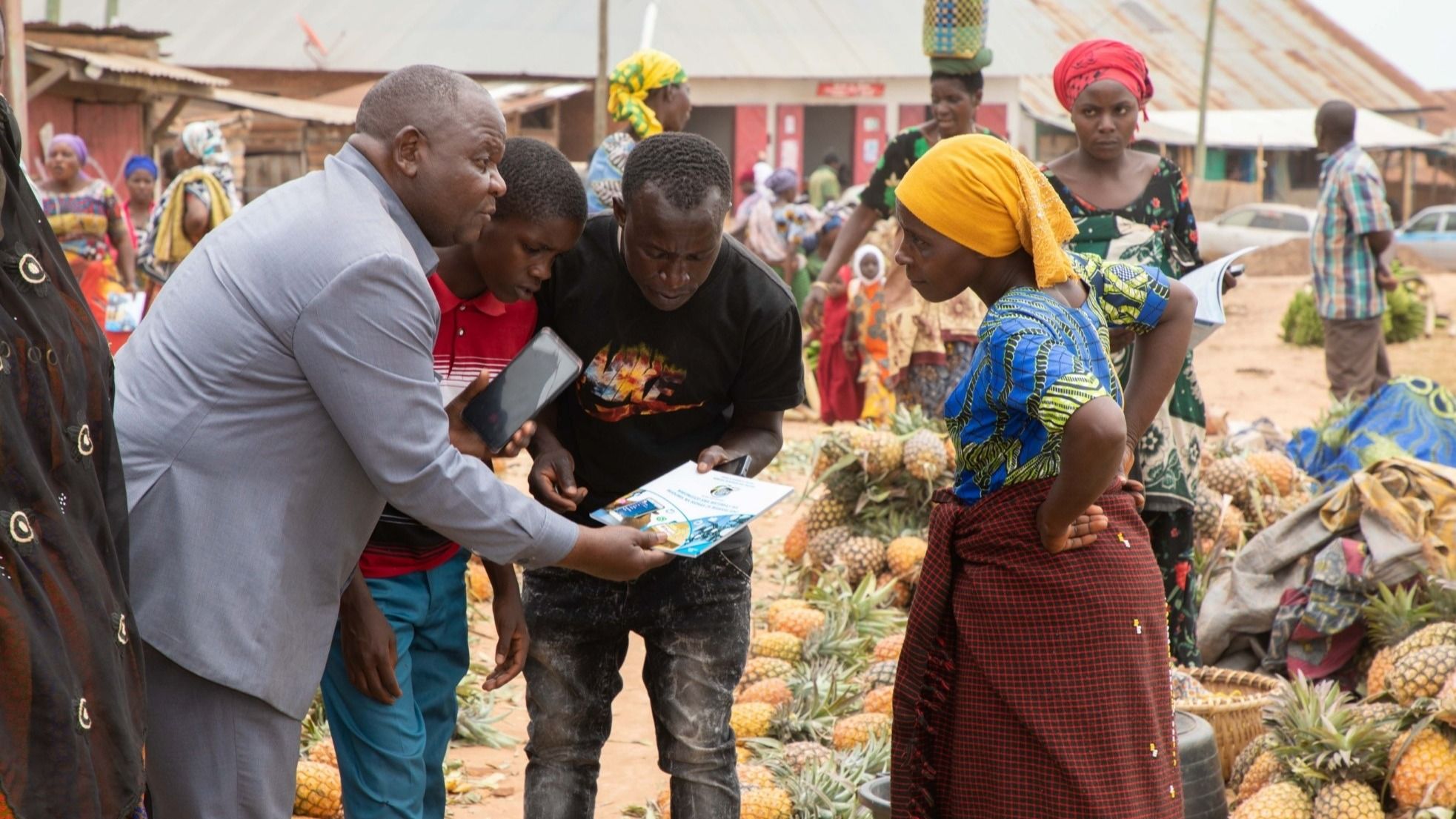
The officer was providing education to members of the public at Kalinzi Village in Kigoma Region near Tanzania-Burundi border recently, as part of TCRA's on-going campaign known as “Kwea Kidijitali “to enhance the level of understanding on the significance of Proper and Safe use of information and communication technology (ICT) services.
Mr. Mwakyanjala re-iterated that, password and other confidential information should not be shared with other people, even closer friends and relatives. He also told people to use passwords that are a mixture of words and numbers and to change them regularly.
The user of a digital device creates a password as a word, letter, or combination of these to prevent unauthorised access to the device, the information stored in the device, an email account, or mobile financial account must be strictly protected.
Mwakyanjala discouraged the use of patterns on smartphones as a means to encrypt user information alerting that it’s possible for third parties to guess and break into and access personal information in their gadgets.
Due to the growth of cyber-crimes the use of strong passwords that involve combination of different characters is very important adding that alerting that conmen have started to guess simpler passwords like those that include year of birth.
"It is important for users of communication devices to refrain from generating simpler passwords that could be guessed by people with bad intention who want to get into their personal information," insisted Mr. Semu.
As most on-line conmen are bent to acquiring personal information posted on social networks, the TCRA Officer advised communication service users should exercise caution whenever deciding what to share on on-line platforms.
Furthermore, he urged users not to engage with individuals who phone them seeking their passwords or personal information; emphasizing on not cooperating with them even if the caller claims to be from the network provider they use.
"Communication between the Service Provider and their customers is only through one hundred (100) number. If you receive a call from a normal phone number, do not follow the instructions; instead, send the fraudulent number or a text message to the number "15040" so that legal action can be taken against the suspected criminals. This number is tall free; attracting no charge for the service," Mr. Mwakyanjala emphasized.
He advised mobile phone users to verify total of number of SIM Cards registered using each user’s National Identification Number (NIN) from National Identification Authority (NIDA) by dialing *106#. The short code is also used for the verification of Status of registration. “If the user finds a mobile phone number, that is not among those, is using she/he should go to the service provider and eras them.” Said the TCRA Officer.
Kigoma is the Country’s leading Region for the cultivation of palm trees that yield palm oil, Mwakyanjala urged the locals of the region to find markets for the rare, valuable commodity through communication service networks that efficient and secure.
Residents in the region applauded the government, through TCRA, for improving the communication in their region and for creating chances to easily access distantly placed markets for their products hence enhance income generation and subsequently improve their standard of living.